
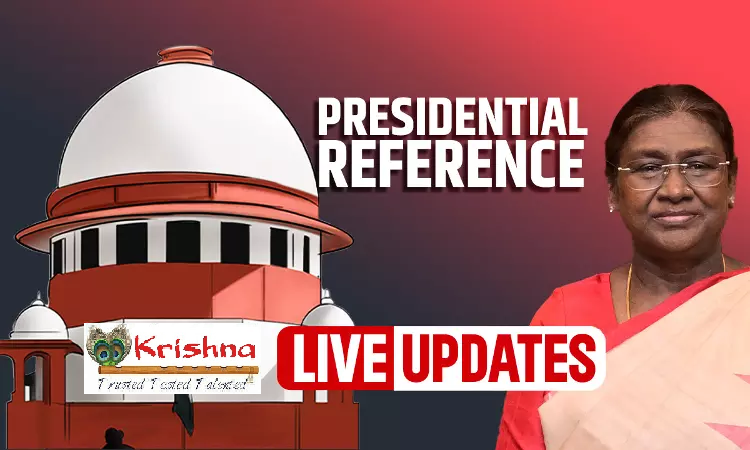
Supreme Court Begins Hearing on Presidential Reference on Bill-Assent Timelines
1. What’s Happening?
-
The Supreme Court has initiated hearings on a Presidential Reference concerning time limits for Governors and the President to grant assent to state bills under Articles 200 and 201 of the Constitution Live LawThe News MinuteThe Times of IndiaScroll.in.
-
The reference probes whether the Court can impose judicially enforceable timelines or procedural directions on these constitutional authorities Hindustan Timesfidelegal.comScroll.in.
2. Case Background
-
This reference follows the Supreme Court’s landmark April 8, 2025 judgment (Tamil Nadu Governor case), where a two-judge bench declared undue delays by the Governor in assenting bills unconstitutional and legally invalidated them Live LawThe News MinuteLive Law Hindi.
-
The Court had imposed a three-month timeline for both Governors and the President to act—any undue delay would trigger “deemed assent”, effectively approving the bill automatically Live LawLive Law HindiThe News MinuteScroll.in.
3. Key Questions Posed by the President
President Droupadi Murmu raised 14 critical constitutional questions, including:
-
Whether Governors and the President are bound by advice from the Council of Ministers (Article 200).
-
If their discretion under Articles 200 and 201 is subject to judicial review.
-
Whether courts can enforce “deemed assent” mechanisms using Article 142.
-
Whether imposing timelines absent in the Constitution is valid and justiciable Live Law.
4. Supreme Court’s Hearing Schedule
-
The Constitution Bench, led by CJI B.R. Gavai (with Justices Surya Kant, Vikram Nath, P.S. Narasimha, and A.S. Chandurkar), began the hearing on August 19, 2025 Live LawLive Law HindiThe News Minute.
-
States of Kerala and Tamil Nadu were given the first hour to raise preliminary objections.
-
Days designated for hearing:
-
Supporting parties (Attorney General and the Union): August 19, 20, 21, and 26.
-
Opposing parties: August 28, and then September 2, 3, and 9.
-
Rejoinders (if any): September 10.
-
-
-
Written submissions were required to be filed by August 12, 2025, with Aman Mehta and Misha Rohatgi appointed as nodal counsel for the Union and the opponents, respectively Live LawLive Law HindiThe News Minute.
5. Key Legal Debates
-
The Centre, via Solicitor General Tushar Mehta, contended that imposing strict timelines risks constitutional disorder by having one branch encroach on another’s powers. He argued such issues should be resolved through political, not judicial mechanisms The Pioneer.
-
Legal scholars remain divided:
-
Proponents argue timelines enhance accountability and prevent legislative logjams.
-
Critics warn of judicial overreach when using Article 142 to impose such directives
-